
Residents residing in less densely populated and 'emerging' communities are enjoying savings on rent but are facing increased expenditures of time and money on transportation. Therefore, when the government announced the expansion of the Dubai Metro, which serves as the cornerstone of the city's public transport network, they welcomed its anticipated positive impact on their daily lives.
"The bus routes are adequate, but the routes can be circuitous, especially in the afternoon when access to the community becomes congested," one resident explained.
"The planned expansion of metro stations would be tremendously beneficial. It would streamline commuting, making it more efficient and reliable by avoiding delays caused by traffic on the roads. This not only promises smoother daily travel but also promises to enhance overall quality of life," he added.
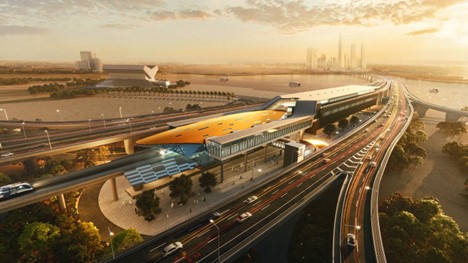
By 2030, there are plans to introduce 32 additional metro stations.
On Sunday, Dubai's Executive Council unveiled plans to expand the Dubai Metro system from its current 64 stations spanning 84 km to 96 stations covering 140 km by 2030. Further expansion aims to reach 140 stations across 228 km by 2040, according to the Roads and Transport Authority (RTA). This initiative aims to increase the public transport share to 45%, reduce carbon emissions to 16 tonnes per capita, and enhance the efficiency and convenience of sustainable transport.
Dr. Monica Menendez, Associate Dean of Engineering for Graduate Affairs at New York University Abu Dhabi (NYUAD) and Director at the Research Centre for Interacting Urban Networks, commented on the announcement: "Expanding the metro system is a positive step. Hopefully, this will be complemented by the expansion of other public transportation modes, such as buses, and enhancements in active transportation infrastructure like walking, biking, and micro-mobility. Additionally, integrating new vehicle technologies could introduce more flexible concepts like shared vehicles and on-demand transportation."
Development oriented towards transportation
Dr. Menendez observed that transit-oriented development will significantly alter Dubai's landscape, traditionally oriented around cars.
"The objective is to establish a public transportation system offering maximum flexibility and personalization, thereby encouraging its use over private cars," remarked the NYUAD professor of Civil and Urban Engineering.
A similar sentiment was echoed by Arijit Nandi, an Indian expatriate residing in The Springs, who expressed a willingness to forego his car in favor of using the Metro.
"The convenience of Metro usage isn't just about time savings; it's also about practicality," he emphasized. "As someone who travels frequently, I prefer taking the Metro to the airport because it's more convenient, avoiding traffic congestion and parking costs."
Currently, the nearest Metro station from his residence is Dubai Internet City. Reflecting on current transport challenges, he noted, "While we do have a car, the bus route takes 45 minutes due to its circuitous path around The Springs and The Greens, whereas driving to the station takes only 10 minutes. Having a Metro station in our community would be a tremendous relief."
Anticipated with great eagerness
Mawada El Magboul, 32, residing in International City, faces additional mobility challenges due to the absence of the Dubai Metro in her neighborhood. She pointed out, "Currently, the nearest metro station is located in Al Rashidiya, necessitating a 15-minute taxi ride costing around Dh35 each way, assuming there's no traffic congestion."
"Alternatively, residents can use one of the three bus routes serving Al Rashidiya station. However, these buses operate only every 20 minutes. If I miss the bus, I have to wait another 20 minutes. Sometimes, these buses are full, and I have to wait for the next one," she emphasized. "We eagerly anticipate a Metro station in our area. It would significantly improve life for residents."
Blue Line by 2029
Residents like El Magboul will have to wait only a few more years for the Metro to reach their community. As early as November last year, RTA revealed details about the 30km Blue Line Dubai Metro extension, which promises to reduce travel times and connect crucial neighborhoods with the city's expanding areas of development.
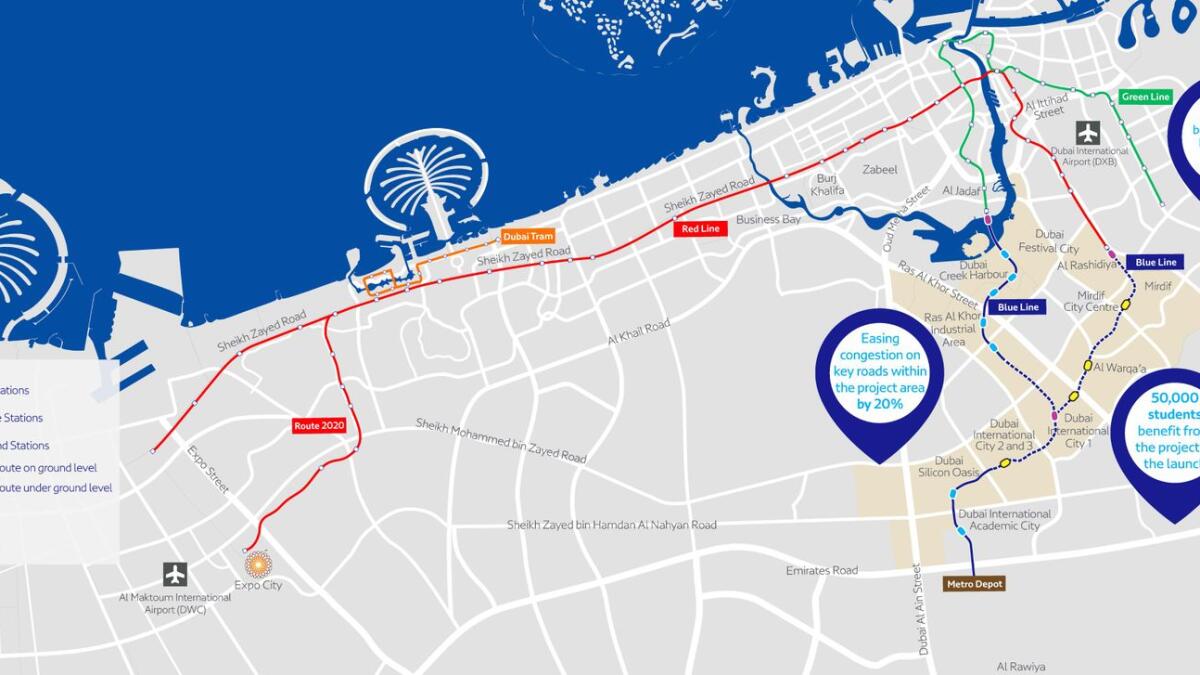
The Blue Line, integral to Dubai's 2040 Urban Master Plan, will link Dubai International Airport (DXB) with nine pivotal locations: Mirdif, Al Warqa, International City 1 and 2, Dubai Silicon Oasis, Academic City, Ras Al Khor Industrial Area, Dubai Creek Harbour, and Dubai Festival City.
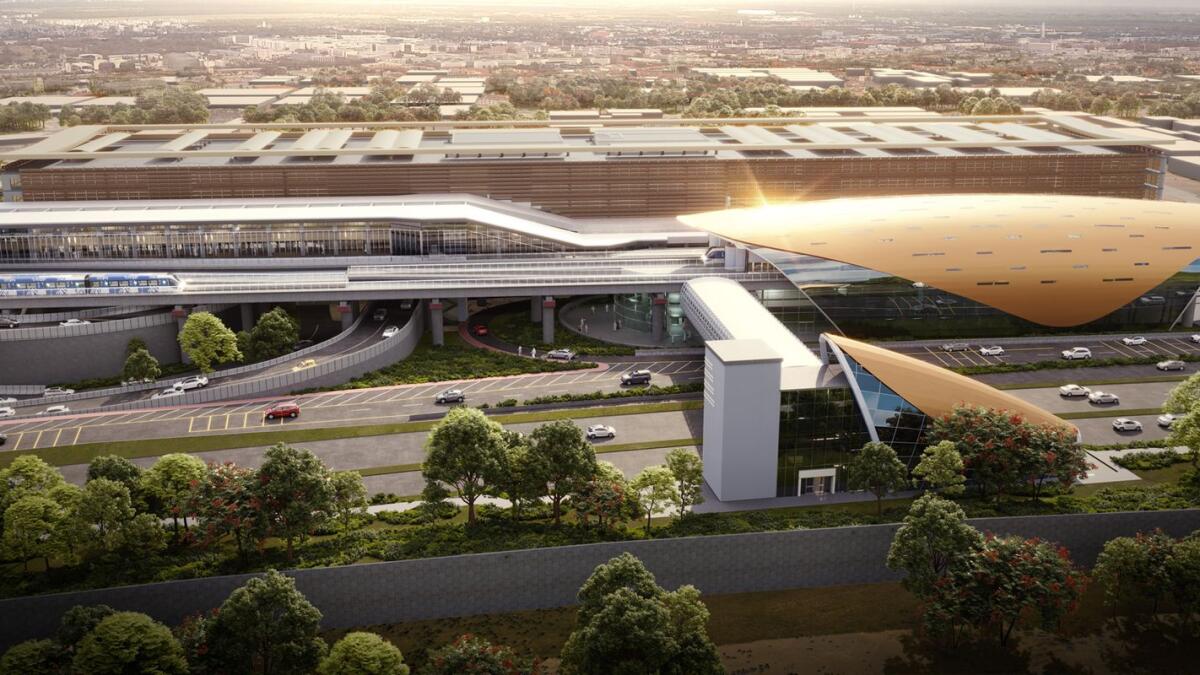
Scheduled for completion by 2029, the Blue Line will feature a historic milestone: trains will traverse the iconic Dubai Creek via a 1,300-meter viaduct, supporting an elevated railway that connects Al Jaddaf with Dubai Festival City and Dubai Creek Harbour.
In burgeoning areas
Numerous residents residing in so-called burgeoning (as opposed to established) neighborhoods are anticipating the establishment of metro stations in their locales. These areas encompass Dubailand, Jumeirah Village Circle, Damac Hills, Emirates Hills, Arabian Ranches, Dubai Sports City, Arjan, Dubai Land Residence Complex, Al Barsha Housing Community, Jebel Ali Housing Community, and Al Barari Housing Community, Dubai South, among others.
However, one potential downside of establishing metro stations in these communities could be the associated rise in rental costs, as property values are anticipated to surge due to the anticipated increased accessibility and mobility in the vicinity.
“Several reasons contribute to the increase in property value upon the construction of new train or metro stations, including enhanced footfall, improved accessibility, greater demand for property, and enhanced connectivity. New transportation connections also encourage more development investment, which can stimulate urban expansion and redevelopment,” stated Andrew Elliott, Commercial Agency Director at Chestertons, a Dubai-based real estate consultancy.
He further stated, “A metro station can make the surrounding area more appealing for both commercial and residential properties, which can lead to higher rental rates and property values.
But on a positive note, he went on, “Some people may view this as an opportunity to dispose of their cars and reinvest the money in higher-quality properties, with the added convenience of public transport right outside their doorsteps.”
Elliott also noted, “The emphasis on sustainability and reducing carbon footprints will make properties near metro stations more attractive to environmentally conscious investors and residents. Enhanced public transport infrastructure will continue to play an increasingly significant role in supporting Dubai's vision of becoming a global hub for both business and tourism.”
📍 Blue Bay Tower - 411 - Marasi Drive,
Business Bay - Dubai, UAE.
Give us a call or drop by anytime, we endeavour to answer all enquiries within 24 hours on business days.
Copyright | RH Homes Realtor. All Rights Reserved.


